All Six Tromsø Orca Tours, Compared
The real question isn’t which boat sees the most whales
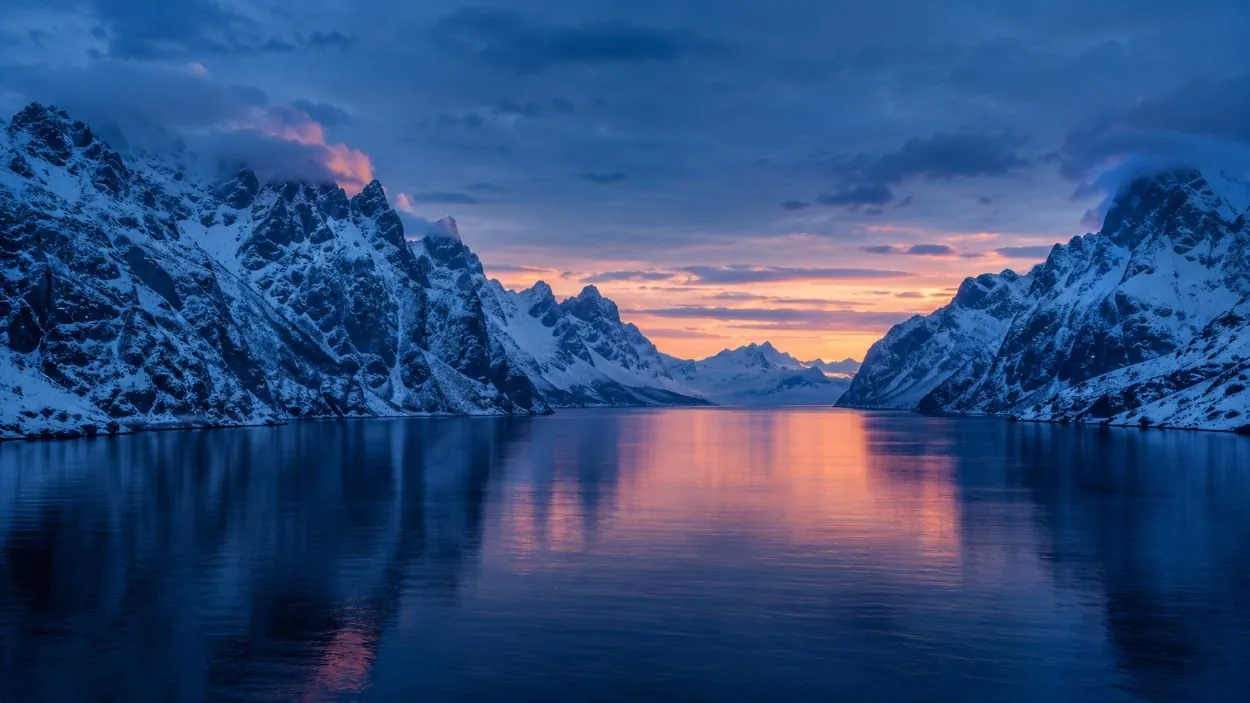
Everyone asks me that one first, and no operator can answer it. The orcas here are herring specialists, and they go where the herring go. The herring moved. Through the 2000s the winter shoals sat down in Vestfjorden and the Lofoten area; the main spawning grounds have since made a poleward shift of roughly 800 kilometres, and since about 2017 the whales have wintered in the fjords around Skjervøy and Kvænangen, north-east of the city. That is the whole reason your day looks the way it does.
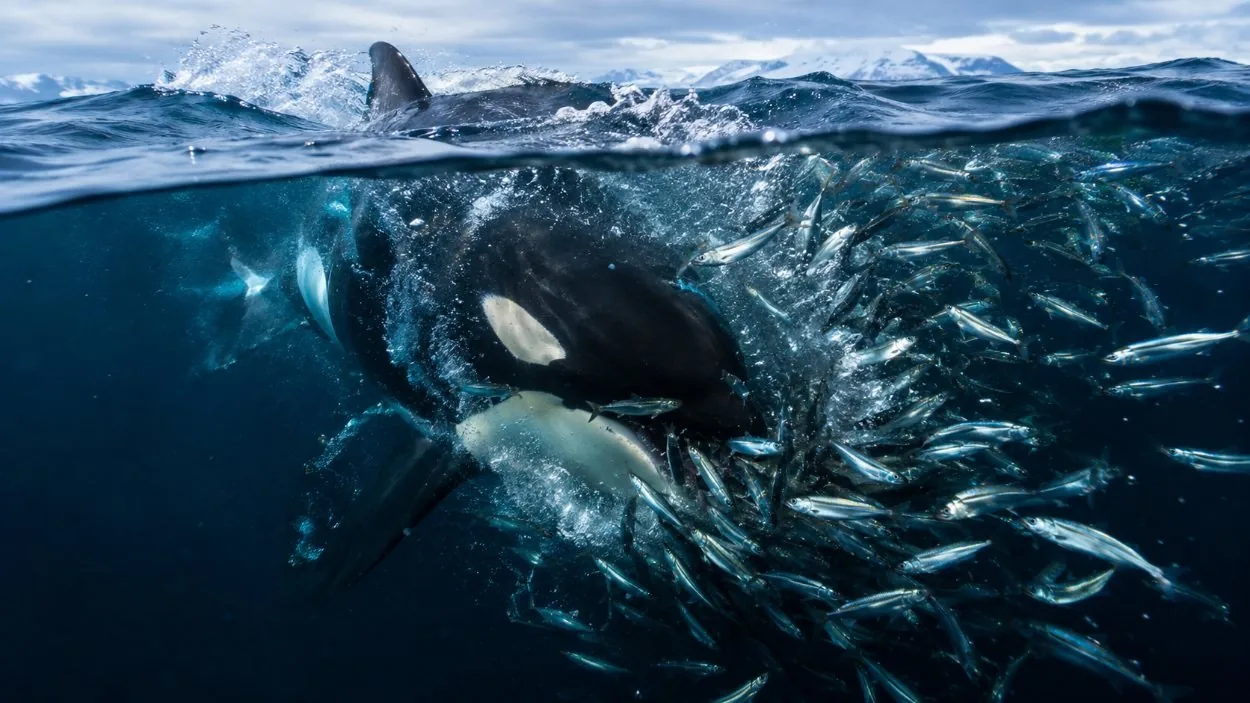
So the question that actually decides your booking is this one: how much of your day will you spend travelling, and how cold are you willing to get, to be in the right fjord in the only five usable hours of light? Answer that and the list below sorts itself. I have written the long version of the argument on RIB versus big boat.
The six, as sold
The line on each card tells you how long the day is. Ratings and review counts were read off the listings on 18 September 2026, and I have not rounded any of them up.
 Most booked
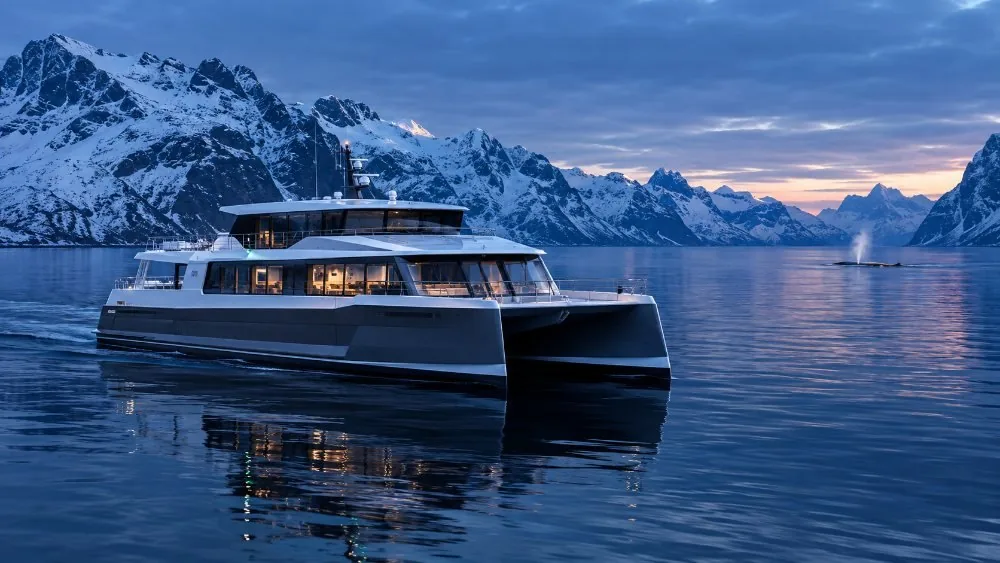
Tromsø: Whale Watching Tour by Hybrid-Electric Boat
 Fast catamaran
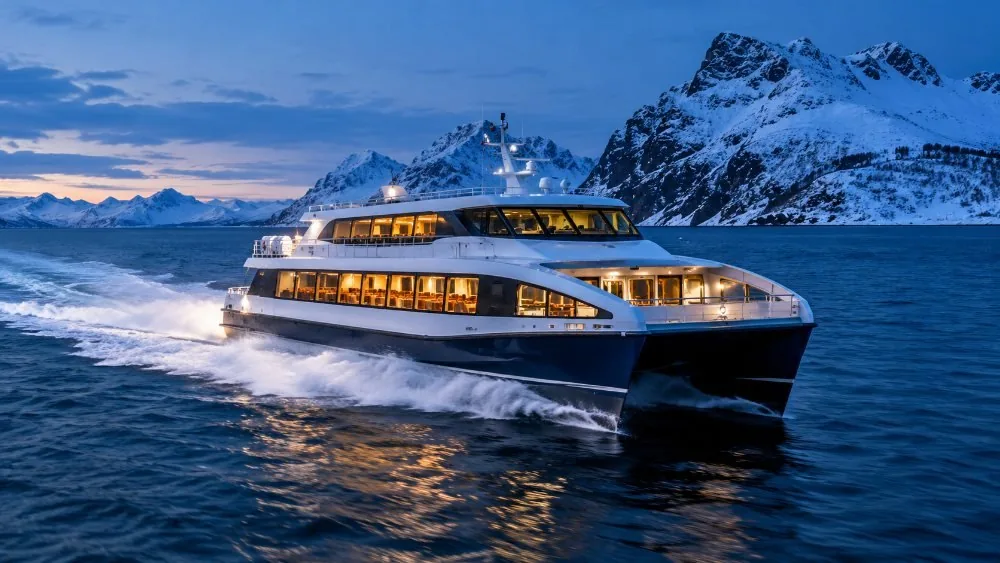
From Tromsø: Whale Watching Safari on High-Speed Catamaran
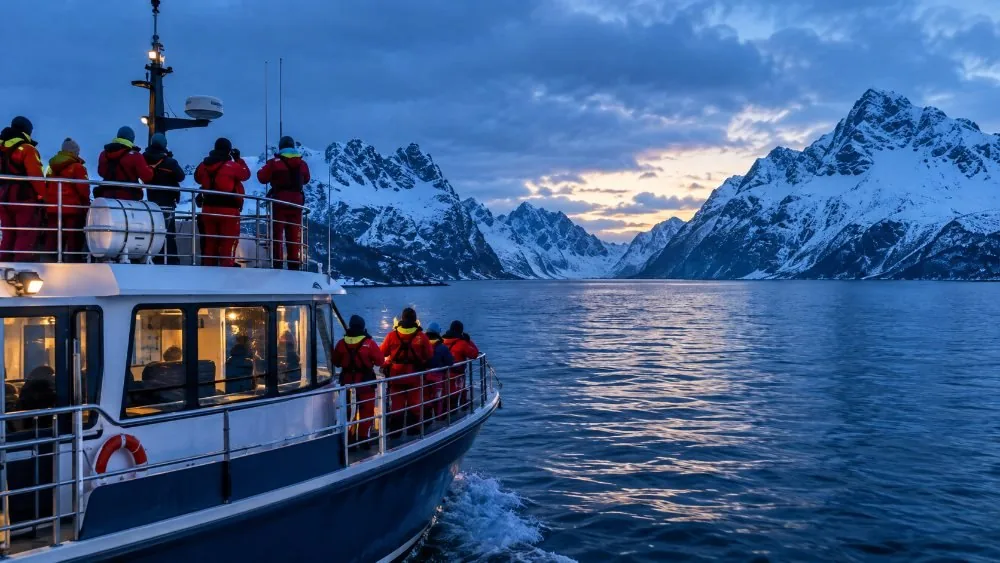 Everything included
Tromsø: Whale & Orca Safari – All-Inclusive (Max 50 pax)
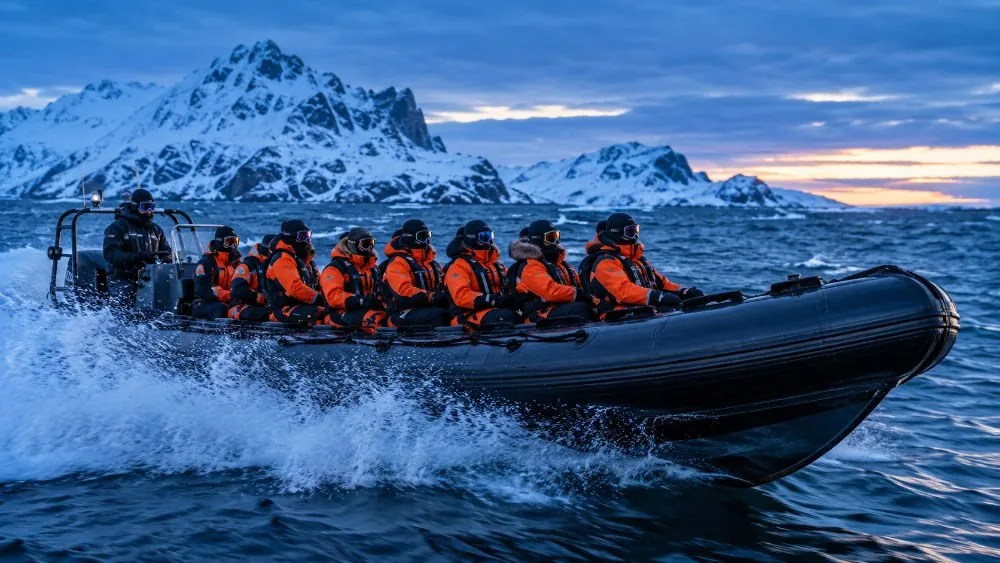 Highest rated
Tromsø: Skjervøy RIB Whale Watching Tour
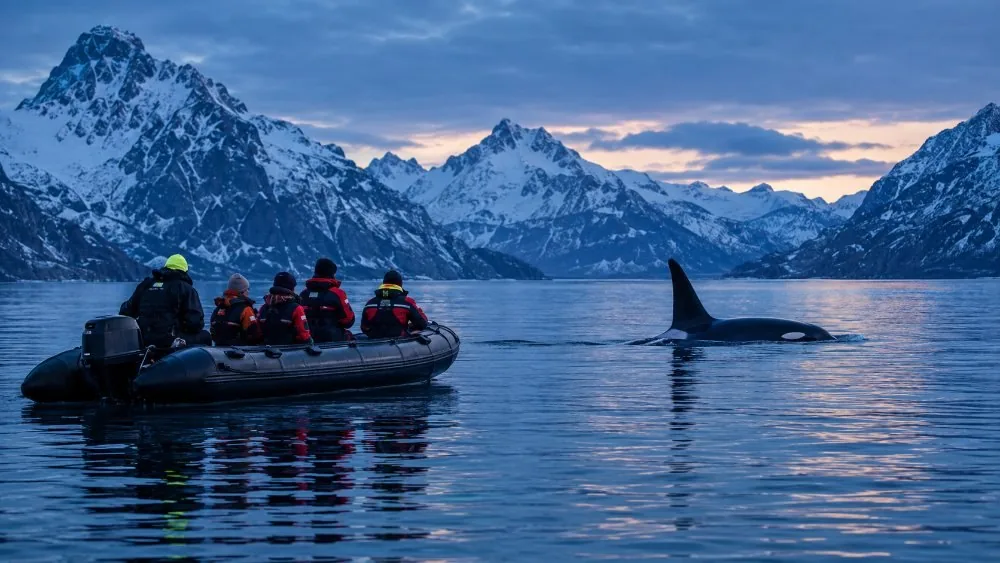 Small RIB groups
From Tromsø: Whale Watching in Magic Skjervøy
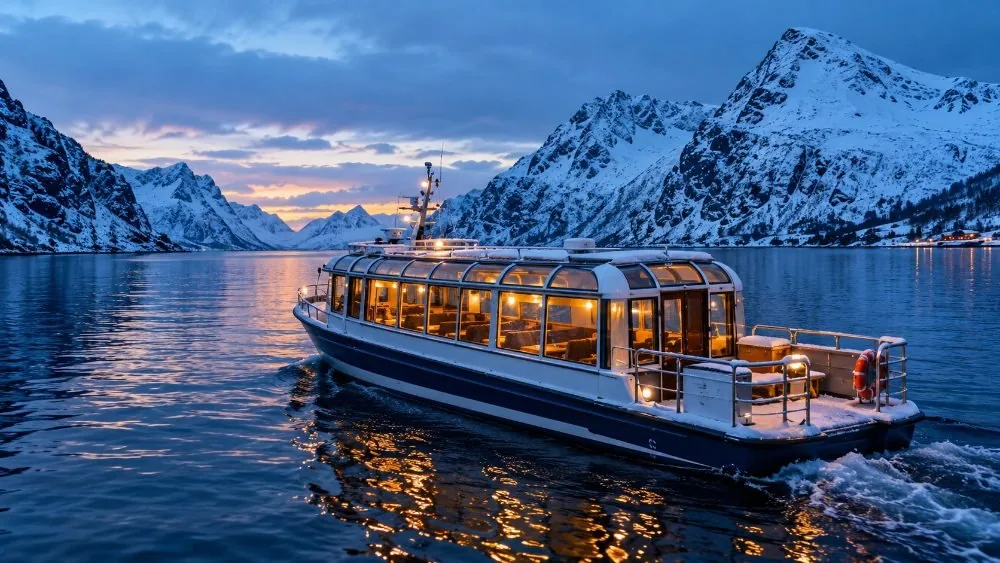 Warm all day
Tromsø: Orca and Whale Watching Heated Boat Trip
Three sail from Tromsø harbour
The hybrid-electric boat is the one most people book. It is a Brim Explorer catamaran carrying over a hundred guests, with heated indoor saloons, panoramic windows, Wi-Fi, tap water and lunch included; anything beyond lunch is sold on board. It runs on battery when it is near the whales, which is the point of it — no engine noise and no diesel fumes on deck at the moment you most want to hear a blow. Seven to nine hours, depending on how far out the whales turn out to be.
The high-speed catamaran, MS Rygerdronningen, does eight hours from the harbourside behind the Nerstranda shopping centre, with a warm lounge and panoramic windows. It publishes the longest season of the six, mid-October to the end of January, and it runs in English and German with Italian added in December and January. Guides, a whale presentation, hot drinks, safety gear and seasickness tablets are included. So is a second-chance re-booking if nothing is seen. Food is not; snacks are sold on board.
The third is the max-fifty-passenger heated boat, eight hours, meeting at the operator’s office on the front pier twenty minutes before departure, with heated thermal suits and every meal and drink handed to you. That one has its own page, because the word doing the work in its title deserves unpicking: what all-inclusive actually covers. All three are set out at length on the big boat page.
Three drive to Skjervøy
These are twelve-hour days and the bus is most of it. The highest-rated tour on the site is the open RIB: boarding outside the Scandic Ishavshotell on Fredrik Langes gate 2 from 04:45, coach away at 05:00 sharp, four hours up, about three hours at sea in a 34-foot open boat, four hours back. Thermal suit, boots, mittens, goggles and life vest are handed out, along with a hot drink and a sandwich.
The small-group RIB leaves Prostneset bus terminal at 05:30 and carries four to twelve people for two and a half to three hours on the water, with baguettes, hot drinks, photographs from the excursion and a year of access to the operator’s orca documentary series thrown in. Both open boats are covered properly on the RIB page, including the limits that stop some people booking them at all.
The third Skjervøy option is the covered, heated premium boat — same bus, same road, three to three and a half hours of cruising with a captain and a nature guide, and a cabin you can go back into. It is the compromise for people who want the right fjord without sitting in an open boat for three hours. The road, the alarm and the argument for accepting both are on the Skjervøy page.
One from each column, side by side
| Tromsø: Whale Watching Tour by Hybrid-Electric Boat | Highest ratedTromsø: Skjervøy RIB Whale Watching Tour | Tromsø: Orca and Whale Watching Heated Boat Trip | |
|---|---|---|---|
| Duration | 7–9 hours | 12 hours | 12 hours |
| Rating at the time of writing | 4.5 from 6,653 | 4.8 from 1,281 | 4.7 from 261 |
| Getting to the whales | By boat from the harbour | About 4 hours by coach each way | About 4 hours by coach each way |
| Time on the water | Most of the day | About 3 hours | 3–3.5 hours |
| Shelter | Heated indoor saloons | None — open boat | Covered, heated cabin |
| Group | 100+ guests | Small open RIB | Larger than a RIB |
| Published limits | None | Age 14, height 140 cm | No children under 6 |
| View → | Book this → | View → |
What the ratings hide
Read that table row again, because it is the most misread number on this site. The hybrid boat carries the lowest headline rating of the six and the largest sample by a very long way. That is not a verdict on the crew. A boat carrying a hundred people on a day when nothing surfaces collects disappointed reviews far faster than a six-person RIB does, and it runs enough departures to collect thousands of them. The reviewers who name their guides — Tobias and Bee turn up repeatedly — are describing the same trip as the people who scored it down.
The number at the other end deserves the same caution. The heated boat sits at 4.7, on a sample of 261, which is by far the smallest here. It may well be the best-run day of the three Skjervøy options. There simply isn’t enough evidence yet to say so, and I would rather tell you that than let a decimal point do the arguing.
Four of the six publish an age, height or weight limit, and they are not the same limit. If you are travelling with a teenager, a short adult or anyone pregnant, check the limit before you fall in love with a boat.
If you only get one attempt
Book it early in your stay. Weather cancels departures up here, the whales are not resident, and a tour cancelled on your last morning is a tour you don’t get to retake. One of the six includes a second-chance re-booking if no cetacean is sighted, which is a free seat on another departure under the operator’s own conditions — not a refund, and nothing like a guarantee.
The best day I have had out there, we didn’t see an orca until the skipper had already turned for home. The worst was nine hours and one distant blow. Both were the same product, sold the same way, on boats crewed by people doing the job properly.
Can’t make these dates?
Browse more available orca watching tours and find one that fits your schedule — all with instant confirmation and free cancellation.
Frequently asked questions
Which Tromsø orca tour should I book?
If you want warmth, stability and no coach, take one of the three boats that sail from Tromsø harbour — seven to nine hours, heated saloons, lunch or a full spread included. If you want to be low, close and in the fjord the whales are actually wintering in, take a Skjervøy day and accept about four hours of road each way. The open RIB is the highest-rated of the six; the covered heated boat is the warm version of the same trip.
Is there a short orca tour from Tromsø city centre?
No, and there never has been. The orcas follow Norwegian spring-spawning herring, and since roughly 2017 those herring have wintered around Skjervøy and Kvænangen, north-east of the city. The shortest option on the whole catalogue is seven hours. Anything advertised as a quick harbour cruise is not a whale safari.
Can I take children on these tours?
On some of them. Four of the six publish a limit: one open RIB sets a minimum age of 14 and a height of 140 cm, the small-group RIB sets 140 cm and a maximum weight of 120 kg, the covered Skjervøy boat takes no children under 6, and the max-fifty heated boat takes none under 4. The limits per product are listed on going with children.
What happens if we don’t see anything?
Usually nothing — you have bought a day at sea, not a sighting. One of the six includes a second-chance re-booking on another departure if no cetacean is seen, subject to the operator’s own conditions, which is a free seat rather than money back. That distinction, and what “sightings today” reports are really worth, is on sightings and guarantees.
When in winter should I come?
Early November to late January, following the herring. That window is about ten weeks long and it sits inside the polar night, so you are working with roughly 09:00 to 14:00 of blue twilight rather than daylight. Month by month, with the trade-offs, is on the best time to see orcas.