Open RIB Whale Tours to Skjervøy
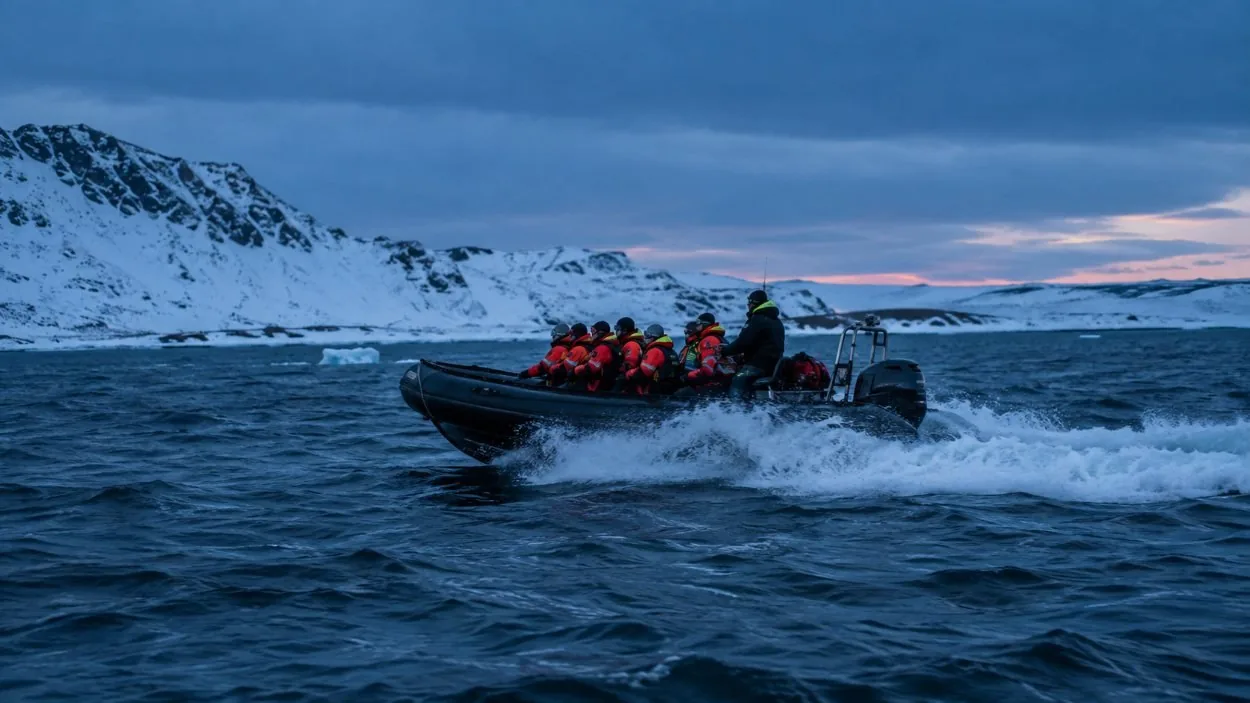
What an open boat in an Arctic winter is actually like
You will be handed a suit that makes you look like a traffic cone. Wear it, and wear proper layers under it, because the suit keeps your own heat in rather than making any of its own. At sea you sit low. The water is an arm’s length away instead of three metres below a rail, and when a humpback surfaces close you feel the blow as much as see it. That proximity is the entire product.
The cost of it is exposure. There is nowhere to go and warm up for two and a half to three hours, no cabin, no door. Spray freezes on your goggles. Your hands stop working before the rest of you notices, which is why the mittens matter more than the jacket. If the thought of that sounds like an ordeal rather than the good bit, take the covered boat instead — the warm version of the same day is on the Skjervøy page, and the heated boats that never leave the harbour are on the big boat page.
The 04:45 boarding
This is the highest-rated tour on the site at the time of writing, and the hardest day on it. Four hours up, about three at sea, four hours back, with a bus that has Wi-Fi and toilets and a skipper who does the actual work. A hot drink and a sandwich are included. Tabitha from the UK called it “the most magical day”; Fiona from Greece logged humpbacks and orcas on the same trip; YingHsuan from Taiwan left the single most practical line in the whole review file, which is to take the seasickness tablets first.
Read the restrictions before you book rather than after. Minimum age 14, minimum height 140 centimetres, and the listing states it is not suitable for pregnant travellers or anyone with back problems. A RIB slams. That is not a comfort note, it is a spine note. Camera gear is at your own risk and drones are not allowed.
The small-group RIB
Meeting point is the ground floor of Prostneset bus terminal, behind the Magic Ice bar. The group size is the difference here: four to twelve people in the boat rather than a full load, which changes how the guide talks to you and how often you get the side of the boat you want. Thermal suits, mittens, balaclavas, waterproof boots and ski goggles are provided. So are fresh baguettes — chicken, ham and cheese, boiled eggs — with tea, coffee and biscuits, photographs from the excursion, and a year’s access to the operator’s orca documentary series.
What comes up over and over in the reviews of this one is conduct around the animals. Sarah from the UK praised the respect shown for “the rules and health of the mammals”. Nathalie from Sweden wrote that you should choose this company if you want a company that cares about the animals. Ann-Sofie from Sweden simply said she couldn’t stop crying. Norwegian whale-watching guidelines ask operators to keep their distance, minimise engine noise and let encounters happen on the whales’ terms, and a small boat with a skipper who takes that seriously is where you feel the difference.
Who these two are not for
What works
- You sit at water level, which is the closest legal look you will get
- Groups are small, so the guide is talking to you rather than a deck
- All the cold-weather gear is handed out and included
- Both are rated above the boats that sail from the harbour
Worth knowing
- No cabin, no roof and no way to warm up for the whole time at sea
- Twelve-hour days with about eight of them spent on a coach
- Minimum height 140 cm on both; one sets a minimum age of 14
- One lists a maximum weight of 120 kg; one rules out back problems and pregnancy
- A 04:45 or 05:20 meeting time means a night before, not just a morning
Handed to you
- Return coach transfers, with Wi-Fi and toilets on board
- A thermal suit, boots and mittens, on both tours
- Goggles and a life vest; balaclavas on the small-group RIB
- A skipper and guide for the time at sea
- Food and a hot drink — a sandwich on one, baguettes and biscuits on the other
- Photographs from the excursion, on the small-group RIB
Not provided
- A roof, a cabin or anywhere to warm up at sea
- Any sighting — nothing here is guaranteed
- Cover for your camera gear, which travels at your own risk
- Drones, which are not permitted
- Warm base layers, which are yours to bring
The layering that makes a thermal suit work is a subject in itself, and getting it wrong is the difference between three good hours and three long ones: what to wear has the order I actually put things on in.
Take the seat behind the skipper on the coach up. It is the least thrown-about place on the mountain road, the lights come on latest there, and you have a reasonable chance of two hours of sleep before Skjervøy.
If the road rather than the boat is what worries you, the four hours are described honestly, hour by hour, on getting to Skjervøy. If you are still weighing an open boat against a warm one, that argument lives on RIB versus big boat.
Can’t make these dates?
Browse more available orca watching tours and find one that fits your schedule — all with instant confirmation and free cancellation.
Frequently asked questions
How cold is an open RIB whale tour in Tromsø?
Cold enough that the operators hand you a full thermal suit, boots, mittens and goggles before you board, and cold enough that there is nowhere to warm up for the two and a half to three hours you are at sea. The suit holds your own heat in, so what you wear underneath decides how the trip goes — see what to wear.
What are the age and height limits on the RIB tours?
The 04:45 departure sets a minimum age of 14 and a minimum height of 140 cm, and states it is not suitable for pregnant travellers or anyone with back problems. The small-group RIB sets a minimum height of 140 cm and a maximum weight of 120 kg. Limits across all six tours are collected on going with children.
Will I get seasick on a RIB?
A rigid inflatable moves more than a big boat and there is no cabin to retreat into, so it is the least forgiving option in the catalogue. One reviewer’s advice, which I would repeat, is to take the tablets before boarding rather than when you start to feel it. The practical version is on seasickness.
Can I take a camera on the open boat?
You can, and the listing is explicit that it travels at your own risk. Spray and a moving boat in twilight are a demanding combination, and drones are not allowed on either RIB. The small-group tour includes photographs from the excursion, which takes some pressure off. Settings for that light are on photography tips.