Orca Watching in Tromsø, Explained
I grew up on Kvaløya and I have done the 04:45 bus more times than I can count, and every winter the same question arrives in the same words. Where do you see the orcas from Tromsø? You don’t. You travel to them, for hours, in the dark, and then you hope. That sentence is the whole site.
The whales followed the herring, and the herring went north
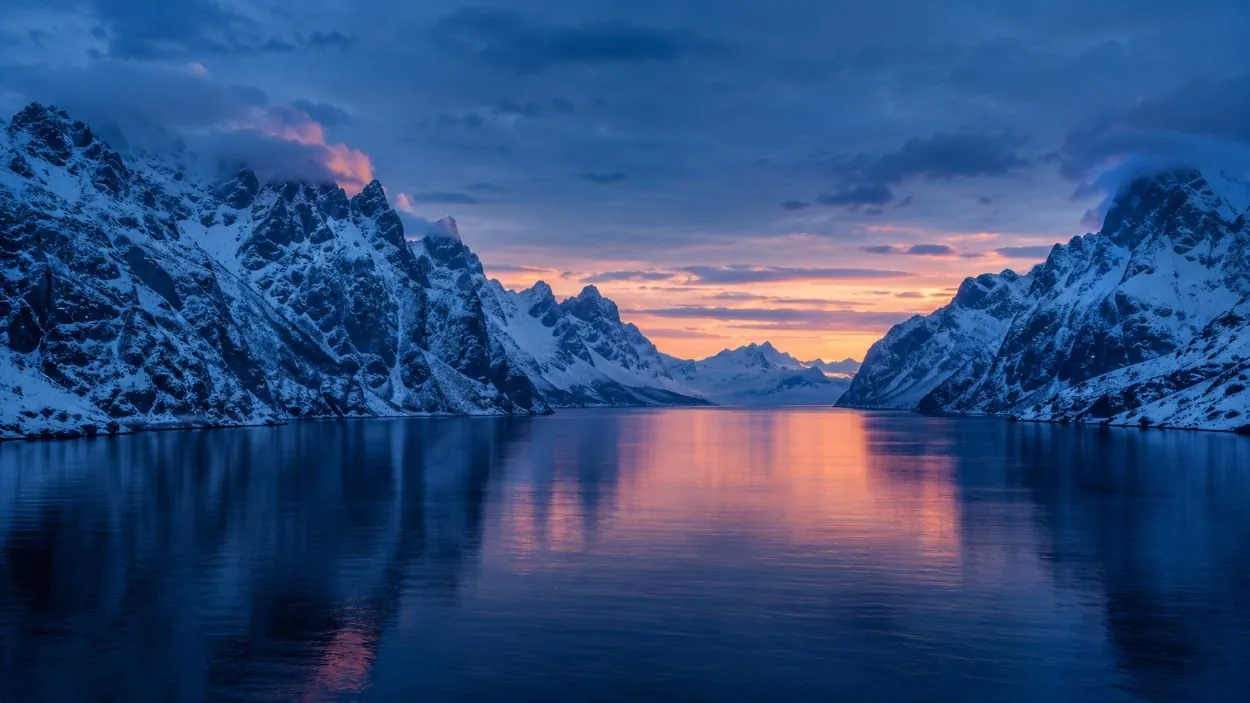
The orcas here are herring specialists. They live on Norwegian spring-spawning herring, they go where it winters, and it has not wintered in the same place for the last thirty years. Through the 2000s the winter shoals sat down in Vestfjorden and around Lofoten, and so did the whale boats. Then the fish moved. Since about 2017 the herring have wintered in the fjords around Skjervøy and Kvænangen, north-east of Tromsø, and the main spawning grounds have made a poleward shift of roughly 800 km.
This is why nobody sells you a one-hour orca cruise from the city centre. There is nothing to see from the city centre. A tour from here is a commute with a gamble at the end of it, and any operator pretending otherwise is selling you the wrong thing. Where they are now, and where they used to be.
Ten weeks, and five hours of light a day
The season runs from about early November to late January. Outside it the same boats are doing fjord cruises and the orcas are scattered along the coast. February is late enough that I would not plan a trip around it, and I say so on its own page.
Then there is the light, or the absence of it. Tromsø sits at about 69.65°N, well north of the Arctic Circle. The sun does not rise at all between 27 November and 15 January, and because of the mountains it is effectively dark from around 21 November to 21 January. What you get instead is roughly 09:00 to 14:00 of blue twilight. Your twelve-hour Skjervøy day starts in the dark, crosses a mountain road in the dark, catches the only usable light there is, and comes home in the dark. I am not complaining. That blue light is the reason the photographs from up here look the way they do, and if you want to shoot in it, read the camera page before you pack. But nobody should buy this expecting a sunny deck. What polar night actually feels like.
Two kinds of day, and the trade between them
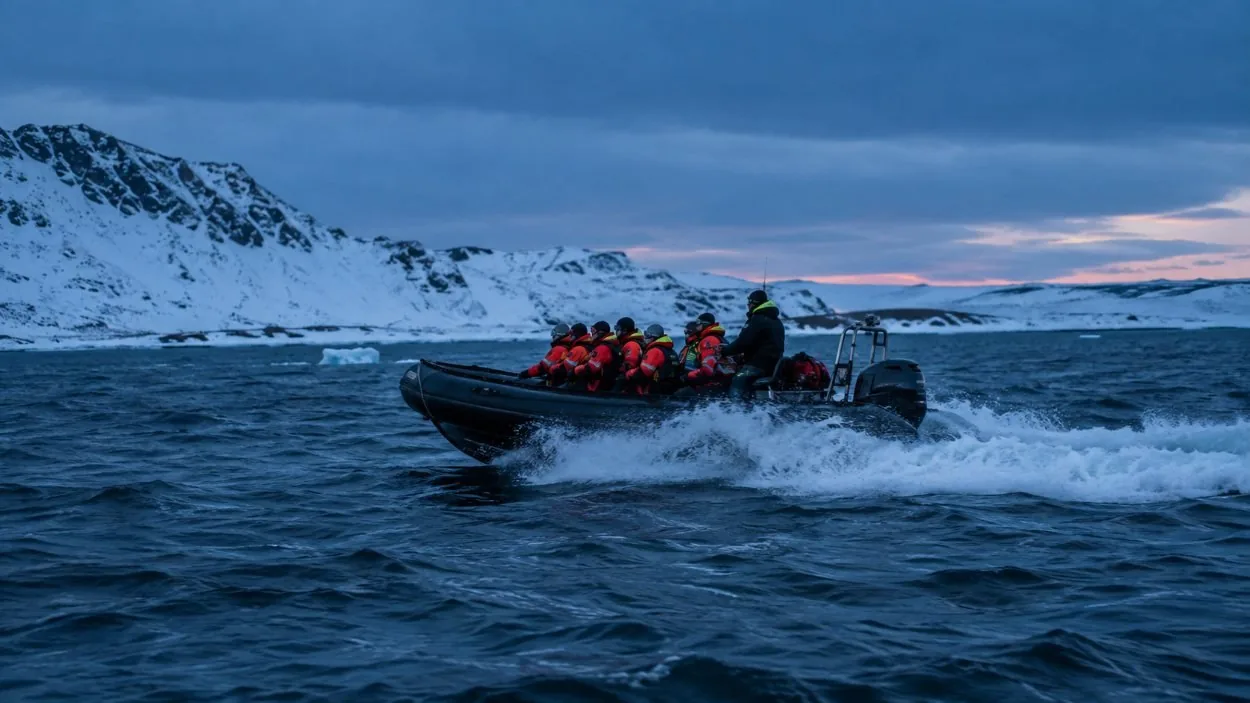
Everything on this site is one of two shapes. A big boat from Tromsø harbour is seven to nine hours, warm, indoor, stable, with a deck to step onto and no bus at either end; it sails towards wherever the whales have been reported. A Skjervøy day is twelve hours, four of them on a bus in each direction, for two-and-a-half to three-and-a-half hours in the fjord the whales are actually in. Smaller groups, lower to the water, colder, and stricter about age and height.
The open RIBs are the coldest and the best-rated of the six, which tells you something about what people value once they are out there. They are also the ones that turn passengers away: minimum age fourteen on one, a 140 cm height floor on both. If you want Skjervøy without sitting in an open boat, the covered heated boat is the compromise, and it is the newest listing here with the smallest review sample. The comparison in full.
What you are actually watching
Carousel feeding. The orcas work cooperatively to herd herring into a tight ball below the surface, stun them with underwater tail-slaps, and then eat them one at a time. It is a group behaviour, it is loud, and it draws everything else in with it. Humpbacks follow the same shoals and are often the commoner sighting of the two; minke and fin whales turn up, and further out some trips have logged sperm whales. Sea eagles come for the same reason the whales do. The rest of the cast — and no, there are no wild polar bears anywhere near Tromsø.
Distance, engines, and staying out of the water
Norwegian whale-watching guidelines ask operators to keep a safe distance, minimise engine noise and disturbance, and let the encounter happen on the whales’ terms. You can hear the difference: reviewers single out captains who are respectful of distance and engine use, and one boat runs on battery around the animals for that reason. In-water encounters are discouraged by the same guidelines. Snorkelling with orcas does exist commercially out of Skjervøy as a separate specialist product, on different days with different gear; the practice is contested and the research literature is critical of it. None of the six tours here involve getting in the sea. The rules, plainly.
What nobody can promise you
Not one operator controls where the whales are. Some offer a second chance, which means a free re-booking on another departure if no cetacean is sighted, on their own conditions — useful, and not the same thing as a guarantee. The best day I have had out there, we did not see an orca until the skipper had already turned for home. The worst was nine hours and one distant blow, and I went back the following week.
So book the day you can actually stand, not the one with the prettiest photographs, and if your week has room in it, keep a second morning free. One departure is one roll of the dice, and the people who go home disappointed are almost always the ones who only rolled once.
Ready to book?
The hybrid-electric boat is the one most people end up on, and it is the gentlest introduction to the day: no bus, a heated saloon and a battery-powered approach to the whales. If you would rather be low to the water and close to it, read RIB or big boat first, then pick from all six tours.
Frequently asked questions
When exactly is the orca season in Tromsø?
Roughly early November to late January, following the herring the whales come to eat. The edges move from year to year, which is why the operators publish slightly different windows. The season page goes month by month, and February gets its own answer because so many people ask.
Do I have to go all the way to Skjervøy?
No. Three of the six tours sail from Tromsø harbour and look for whales wherever they are that week, which costs you sea time instead of road time. The other three drive north and put you in the fjord the whales have been wintering in. Getting to Skjervøy sets out what that day actually looks like.
What happens if we do not see anything?
Some operators offer a second chance, which is a free re-booking on another departure rather than a refund, and it comes with their own conditions. Nobody guarantees an orca, and any page that says otherwise is selling you something. What happens if you see nothing explains how those policies work in practice.